
Which is more suitable for electric vehicles, cylindrical cells or pouch cells?
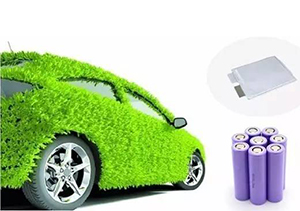
In the field of automotive power battery applications, what are the advantages and disadvantages of 18650 lithium batteries and pouch batteries?
The difference in the form of electrolytes is key
As the two mainstream power batteries on the market, 18650 batteries and lithium polymer pouch batteries are distinguished by the material of the shell package. 18650 batteries are generally packaged in a steel shell (18 means diameter 18mm, 65 means length 65mm, 0 means cylindrical battery), and the structure of the internal electrode pad and separator is winding. The outer packaging of lithium polymer pouch batteries uses aluminum-plastic film, and the internal electrode sheets and separators are stacked (stacked layer by layer).
Although the shape and internal structure are different, the principle of these two batteries is basically the same. Both batteries have cathode, anode and electrolyte, the cathode material is generally lithium cobalt oxide, nickel cobalt lithium manganese oxide (ternary material), lithium iron phosphate or lithium manganese oxide, etc., the anode material is generally graphite, and the electrolyte is lithium hexafluorophosphate solution.
The main difference between the two is that the electrolyte, one of the internal materials of the battery, has a different form: the electrolyte inside the lithium polymer pouch battery is polymer, generally gel or solid, while the electrolyte inside the 18650 battery is generally liquid.
Each has its own advantages and disadvantages and different application fields
18650 lithium batteries and lithium polymer pouch batteries have their own advantages and disadvantages. At present, the production of 18650 batteries has a high degree of automation, the consistency and safety of the battery have reached a high level, and the small size and light weight of the battery itself make it have unique advantages in the modularity and standardization of system development. Many people believe that using 18650 batteries as the power source of new energy electric vehicles is the best choice at this stage.
However, the 18650 battery also has an unavoidable disadvantage, that is, the unit capacity is low (generally around 2~4Ah). This makes the number of cells required for the application of 18650 batteries very large, and the battery management system to maintain cell consistency and battery heat dissipation is more complicated.
Compared with 18650 batteries, lithium polymer pouch batteries have higher cell capacity, and have the advantages of thinning, arbitrary area and arbitrary shape (ultra-thin batteries of 0.33mm, 0.50mm and other models can be made), and its main disadvantages are poor consistency and poor mechanical strength. Based on the characteristics of lithium polymer pouch batteries, lithium polymer pouch batteries are increasingly being used in mobile phones, laptops, power banks and other fields. However, due to the poor conductivity and high internal resistance of colloidal (or solid) electrolytes, lithium polymer pouch batteries are rarely used in electric vehicles now.
Pouch batteries are not all lithium polymer batteries
Since lithium polymer pouch batteries are rarely used in electric vehicles, what type of battery is Nissan Leaf's stacked pouch battery?
In fact, although lithium polymer pouch batteries are generally referred to as pouch batteries, because pouch batteries can also use liquid electrolyte, pouch batteries are not all lithium polymer batteries. The battery of the Nissan Leaf is a pouch battery with liquid electrolyte.
Whether it is a lithium polymer pouch battery or a pouch battery with an internal material of liquid electrolyte, the pouch battery is generally packaged in aluminum-plastic film. The thickness of the aluminum-plastic film is thin, the mechanical strength is poor, and in extreme situations such as car collisions, the aluminum-plastic film is easy to break and cause accidents, which is the main defect of pouch batteries in new energy vehicles.
It is reported that in order to ensure safety, Nissan Leaf adds an aluminum shell to the battery module composed of 4 cells to ensure safety. Even so, battery leakage is still a fatal flaw in the Nissan Leaf battery, which has the title of "leakage king" among riders and is often criticized.
Back to the list

Send Us A Message